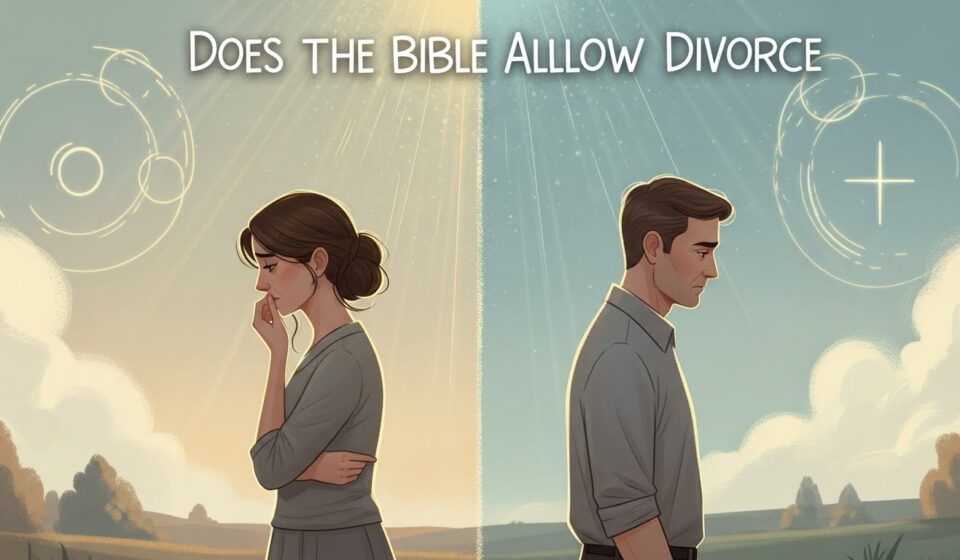
Does the Bible Allow Divorce?
Does the Bible allow divorce? The Bible allows divorce in limited circumstances, while clearly teaching that God’s original design for marriage is lifelong faithfulness, healing, and covenant love. Scripture addresses divorce with both moral clarity and deep compassion for human pain.
Table Of Content
- Does the Bible Allow Divorce According to God’s Original Design?
- Marriage Was Meant to Be Permanent
- God’s Design Reflects His Character
- Why Does the Bible Talk About Divorce at All?
- Divorce Is a Response to Sin, Not God’s Desire
- God Recognizes Human Pain
- Does the Bible Allow Divorce Under Certain Conditions?
- Sexual Unfaithfulness as a Biblical Ground
- Abandonment by an Unbelieving Spouse
- God Does Not Enslave the Innocent
- God’s Heart Toward Divorce and the Brokenhearted
- Restoration Is Always God’s First Desire
- God Offers Grace, Not Shame
- How Should Christians Understand Divorce Today?
- Hold Truth Without Compromise
- Show Compassion Without Condemnation
- Seek Wisdom, Counsel, and Prayer
- Hope and Redemption After Divorce
- Conclusion
- Frequently Asked Questions
- Does the Bible allow divorce for any reason?
- Did Jesus allow divorce?
- Is divorce always a sin?
- Can divorced people remarry according to the Bible?
- Does God forgive divorce?
- Should Christians stay in abusive marriages?
- Does God hate divorced people?
- How should churches support divorced believers?
Does the Bible allow divorce refers to the biblical teaching that divorce is not God’s ideal for marriage, yet it is permitted in specific situations because of sin, brokenness, and human hardness of heart, while God continually calls people toward healing, repentance, and restoration.
While the Bible allows divorce in certain situations, God’s original design was always for a strong and lasting relationship built on love and commitment. To understand God’s plan better, learn how to build a happy biblical marriage.
Does the Bible Allow Divorce According to God’s Original Design?
From the beginning, God established marriage as a lifelong covenant rooted in unity, faithfulness, and love. He created marriage to reflect His own steadfast commitment to His people.
Jesus clearly affirmed this design when He spoke about marriage.
“What God has joined together, let no one separate.” Matthew 19:6
God did not design marriage as a temporary arrangement. Instead, He intended it to be a secure and loving bond that nurtures trust, companionship, and spiritual growth.
God’s plan was always for marriage to reflect joy, unity, and spiritual connection. This deeper purpose is explained in what makes a truly joyful relationship. Discover what makes a joyful God-centered marriage.
Marriage Was Meant to Be Permanent
Marriage reflects God’s covenant faithfulness. Therefore, divorce was never part of His original plan, because separation brings deep emotional and spiritual wounds.
God’s Design Reflects His Character
God remains faithful even when people fail. In the same way, marriage was designed to mirror commitment, forgiveness, and perseverance.
Why Does the Bible Talk About Divorce at All?
Although God’s design is clear, Scripture also addresses the reality of human sin. Broken trust, betrayal, and hardened hearts disrupt what God intended for good.
When religious leaders questioned Jesus about divorce, He explained why Scripture permits it.
“Moses permitted you to divorce your wives because your hearts were hard.” Matthew 19:8
Divorce appears in the Bible as a concession, not a command. God acknowledges human brokenness while still pointing people toward His higher purpose.
Divorce Is a Response to Sin, Not God’s Desire
Sin damages relationships. Because of this, God provided boundaries to protect vulnerable people rather than forcing them to remain in destructive situations.
God Recognizes Human Pain
Rather than ignoring suffering, God meets people within it. Scripture shows that God understands betrayal, abandonment, and emotional harm.
Does the Bible Allow Divorce Under Certain Conditions?
Yes, the Bible allows divorce in specific circumstances. Scripture identifies limited situations where divorce is permitted, though never celebrated.
Sexual Unfaithfulness as a Biblical Ground
Jesus taught that sexual immorality deeply violates the marriage covenant.
“Anyone who divorces his wife, except for sexual immorality.” Matthew 19:9
Adultery shatters trust and breaks covenant intimacy. While forgiveness and restoration remain possible, Scripture allows divorce when repentance and rebuilding do not occur.
Abandonment by an Unbelieving Spouse
The apostle Paul addressed situations where one spouse chooses to leave the marriage.
“If the unbelieving partner leaves, let it be so.” 1 Corinthians 7:15
God does not require a believer to remain bound to a marriage when the other spouse has willfully abandoned it.
God Does Not Enslave the Innocent
In cases of abandonment, God prioritizes peace and freedom over forced endurance. His concern remains the well-being of the faithful spouse.
God’s Heart Toward Divorce and the Brokenhearted
Even when the Bible allows divorce, God’s heart remains focused on healing rather than separation. He consistently draws near to those experiencing pain and loss.
“The Lord is near to the brokenhearted.” Psalms 34:18
God does not abandon those who walk through divorce. Instead, He offers comfort, wisdom, and hope for renewal.
Restoration Is Always God’s First Desire
Whenever safety, repentance, and willingness exist, God encourages reconciliation. Healing honors His design and brings lasting peace.
God Offers Grace, Not Shame
Scripture never treats divorced individuals as rejected. God extends grace, forgiveness, and a future filled with purpose.
How Should Christians Understand Divorce Today?
Because the Bible allows divorce with limits, believers must approach the topic with both truth and compassion. Judgment and condemnation do not reflect God’s heart.
Hold Truth Without Compromise
Christians must uphold God’s design for marriage clearly and faithfully, even when culture pressures compromise.
Show Compassion Without Condemnation
At the same time, believers should walk gently with those affected by divorce, recognizing the deep wounds involved.
Seek Wisdom, Counsel, and Prayer
Scripture encourages seeking godly counsel and prayerful discernment when facing marital crisis. God often works through community to bring clarity and healing.
Hope and Redemption After Divorce
Divorce does not define a person’s worth or future. God remains the God of restoration, new beginnings, and redemption.
He heals wounds, rebuilds faith, and restores identity in Him rather than in past failures.
God’s grace reaches beyond broken chapters and writes stories of renewal and purpose.
strong families and meaningful friendships
Conclusion
Does the Bible allow divorce? Scripture teaches that while divorce was never God’s original plan for marriage, it is permitted in limited circumstances because of human sin and brokenness. Throughout Scripture, God reveals a heart of compassion, justice, and restoration, offering healing, grace, and hope to all who seek Him.
Frequently Asked Questions
Does the Bible allow divorce for any reason?
No. The Bible allows divorce only in specific situations, such as sexual immorality or abandonment, not for convenience or personal preference.
Did Jesus allow divorce?
Jesus acknowledged divorce because of hardened hearts, while strongly affirming God’s original design for lifelong marriage.
Is divorce always a sin?
Divorce itself is not always sinful. Scripture permits it in certain circumstances while still grieving its brokenness.
Can divorced people remarry according to the Bible?
The Bible addresses remarriage carefully, often connecting it to the circumstances surrounding the divorce.
Does God forgive divorce?
Yes. God offers forgiveness, healing, and restoration to all who repent and seek Him.
Should Christians stay in abusive marriages?
Scripture prioritizes safety. Abuse violates God’s design, and seeking protection aligns with God’s heart for justice and care.
Does God hate divorced people?
No. God hates the harm caused by broken covenant, yet He deeply loves people affected by divorce.
How should churches support divorced believers?
Churches should offer compassion, counsel, prayer, and community without judgment or stigma.
Questions about culture and marriage often create confusion, but the Bible gives clarity beyond human traditions. Learn God’s truth about interracial marriage today.